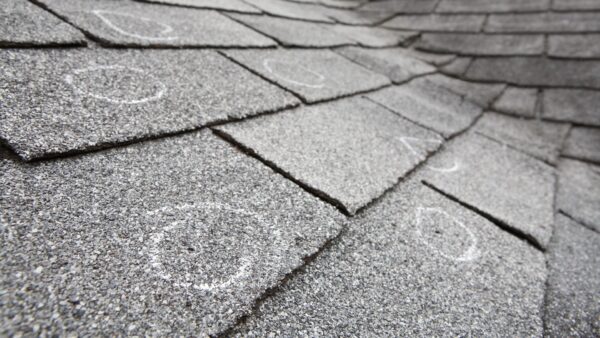
Hail damage often doesn’t show up right away, but in Minnesota’s climate, small issues turn into big ones fast. Know what to look for, document it early, and get a professional inspection before making any decisions or calling your insurer.
Table of Contents
How Hail Actually Damages Your Roof
Hail does more than leave visible dents. On asphalt shingles, it knocks off the protective granules that shield your roof from UV rays and moisture. Once those granules are gone, shingles deteriorate much faster, and in Central Minnesota, freeze-thaw cycles make this worse. Water seeps into small cracks, freezes, expands, and quietly turns minor damage into a much bigger problem.
Common signs to look for:
- Dark spots or bruising on shingles
- Missing granules collecting in gutters
- Cracked or weakened shingles
- Soft spots if you have safe roof access
Signs You Can Spot From the Ground
You don’t need to climb on your roof to get a sense of whether hail caused damage. Walk your property after a storm and look for dented gutters, downspouts, or roof vents, granules or shingle pieces near downspouts, damage to siding or window trim, and water spots forming on interior ceilings. Dents on metal surfaces like gutters are often the first clue. If those took a hit, your roof likely did too.
Why Waiting Makes It Worse
Hail damage rarely causes an immediate leak, and that’s actually what makes it dangerous. A weakened roof lets in moisture slowly, and by the time it’s obvious inside your home, the damage has usually spread further. In Minnesota’s climate, small issues escalate quickly and can lead to:
- Hidden leaks and moisture in the attic or insulation
- Mold or structural damage over time
- Higher energy bills from compromised sealing
- Full roof replacement sooner than expected
What to Do When Hail Hits
You don’t need to have everything figured out right away, but a few early steps make a real difference:
- Walk your property and photograph anything that looks off, including dented gutters, displaced granules, and damaged trim
- Avoid going on the roof yourself
- Schedule a professional inspection before contacting your insurance company
- Use the inspection findings to document your claim accurately
Working With Your Insurance Company
Getting a professional inspection before you file a claim is one of the most useful things you can do. It gives you a clear, documented picture of the damage so you’re not guessing when you talk to your insurer. The Lutgen team is familiar with the insurance process and can help make sure your inspection findings are documented in a way that supports your claim. Having that foundation in place makes the entire process smoother and reduces the chance of anything being overlooked.
When to Repair and When to Replace
If damage is isolated to one area and your roof still has good years left, repair is usually the right call. But when impact is widespread, granule loss covers multiple sections, or the roof is already aging, replacement is the smarter long-term investment. Patching a compromised roof tends to become a cycle of ongoing repairs that adds up fast. A full replacement restores your protection and eliminates that uncertainty.
Don’t Forget the Rest of Your Exterior
Your roof takes the worst of a hailstorm, but gutters, siding, and window seals are often damaged at the same time. Addressing everything together rather than in separate repair calls keeps your home fully protected and usually saves money in the long run. It’s not uncommon for homeowners to find that what looked like a roof-only issue is actually part of a wider exterior problem.
Get a Professional Set of Eyes on It
If hail has hit your area, the most useful thing you can do is get a clear picture of what you’re dealing with before making any decisions. Lutgen Companies has helped more than 10,000 homeowners since 1983 assess storm damage and find the right long-term solution. Schedule a free inspection to have your roof and home exterior evaluated so whatever you decide next, you’re deciding with confidence.